
Your Purchase Helps
shelter pets in need
Each order helps pets in need
shelter pets in need
Each order helps pets in need

Seven dry foods for a German Shepherd that leaves the bowl half full are below, and each entry sticks to what its own listing says. A listing describes ingredients and nutrients. It cannot tell you whether your dog will eat the food, so the first job is to find out why your dog is not eating.
A dog that skips a meal now and then is one thing. A dog that stops eating, or that wants to eat and cannot, can be sick. The American Kennel Club (AKC) and VCA Animal Hospitals both say appetite changes are worth taking seriously, and the first two sections cover how to tell the difference and when to call the vet. The food list comes after that.
Whether a dog counts as a picky eater depends on what happens at mealtime. Dr. Jerry Klein, the AKC's chief veterinarian, says dogs that do not empty their bowls within about 20 minutes are more likely to be considered picky eaters. He also names a second sign: a dog that refuses its own food but happily takes table scraps.
He adds that many eating habits are tied to a dog's environment, and he recommends a routine. Set mealtimes, leave the food out for no longer than 15 to 20 minutes, and if the dog eats nothing, take the bowl away and offer no more food or treats until the next scheduled meal. In his words, leaving food out long term encourages bad eating habits and is unsanitary.
Stress or a changed routine can also explain a dog that is not eating, according to both the AKC and VCA.
The AKC says to contact your veterinarian if your dog shows a significant appetite change that lasts longer than 12 to 24 hours and does not return to normal. Some dogs need a call right away: puppies under 6 months old, dogs whose appetite change comes with vomiting or diarrhea, dogs with diabetes, and dogs (especially seniors) that seem to want to eat but do not, or will only eat soft food.
VCA explains why. Its veterinarians write that poor appetite or refusal to eat is strongly associated with illness. They list causes that include kidney disease and diabetes, pain anywhere in the body, nausea, and medication side effects. They also describe dogs that want to eat but cannot, because of mouth pain, advanced periodontal disease with loose teeth, or sore chewing muscles. VCA says the vet's first step is to work out whether the dog does not want to eat or wants to eat and cannot.
If your vet finds nothing wrong, the food is the next thing to look at, and the list below is where to start. If your vet points to a food sensitivity, our guide for German Shepherds with sensitivities lists foods to look at.
Here are the seven foods, with what each Amazon listing says about it. Check the price and stock on each listing, because both change.
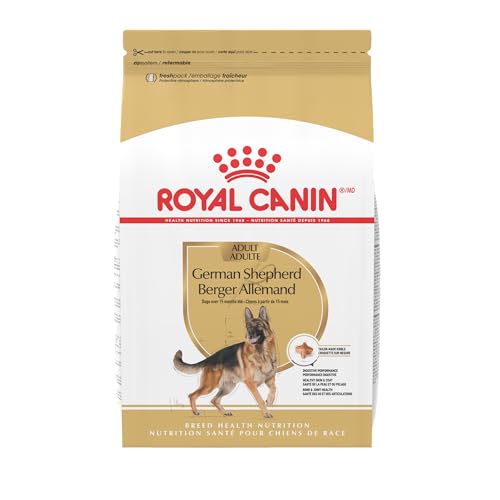
The listing calls this a breed health nutrition formula for purebred German Shepherds 15 months and older, so it is not for a younger puppy. It says the kibble has a shape and texture designed for the breed's long, strong muzzle and teeth.
For digestion, the listing says highly digestible proteins and specific fibers help maintain digestive health. It also lists glucosamine and chondroitin for bone and joint support, and nutrients that help support the skin barrier.

The listing says this food was developed by Dr. Gary Cotton, DVM, for German Shepherds, Rottweilers, Dobermans, and other large breeds, and that it is formulated for digestive and skin health. The bag in the listing photo is a 4 pound bag. Check the listing for current stock.
It lists a blend of soluble and insoluble fiber for the digestive system, omega-3 fatty acids from menhaden fish oil for the coat, and New Zealand green-lipped mussels with glucosamine and chondroitin for joints. The listing also says it is cooked slowly at a low temperature in Ohio and has no corn, wheat, soy, or by-product meals.
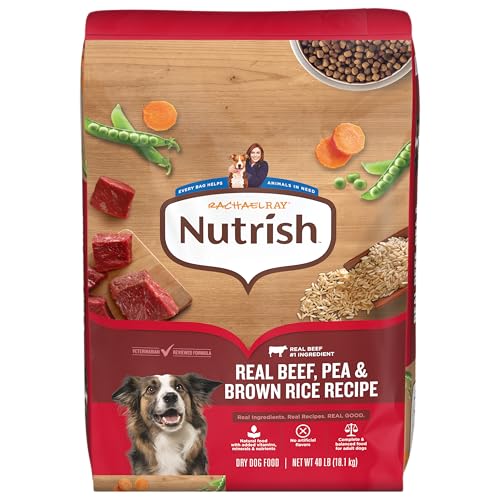
The listing says this adult formula is suitable for small, medium, and large dogs of all breeds. Real beef is listed as the first ingredient.
The listing calls it a veterinarian reviewed formula with added vitamins, minerals, and nutrients and no artificial flavors. The bag in the listing is 40 pounds.

This is a senior formula. The listing says it is for large dogs weighing 56 to 100 pounds, and the bag in the photo is marked Aging 8+. It lists minerals and nutrients for bone and joint support, digestible proteins, fibers, and prebiotics for stool quality, and precise mineral and amino acid levels to support aging kidney and heart health.
The listing also says the crunchy kibble pairs well with Royal Canin wet dog food for added palatability and hydration. An older dog that eats less than it used to should see the vet first, because the AKC says seniors that seem to want food but will not eat it need a prompt call.

The listing title for this one is Hill's Science Diet Adult 6+ Large Breed, so it is meant for adult dogs from age 6. The bag in the photo is the chicken recipe.
The listing lists high-quality protein for lean muscle, natural sources of glucosamine and chondroitin for joints, natural fibers for digestion, and key nutrients to support eye, heart, kidney, and joint health. It says the food is made with natural ingredients in the USA.

The listing calls this a lamb and rice recipe with real meat as the first ingredient, made of tender morsels mixed with crunchy kibble.
For digestion, the listing says the formula has prebiotic fiber and microbiome balance to support gut and immune health. It also lists glucosamine for joints and omega-6 fatty acids with vitamins A and E for skin, coat, and eye health.

The listing says salmon is the first ingredient and describes the food as 100 percent complete and balanced nutrition for large adult dogs. For the stomach, it lists easily digestible oat meal and natural prebiotic fiber that nourishes specific intestinal bacteria, and it says the formula is gentle on the stomach to maintain stool quality.
It also lists glucosamine and EPA, an omega-3 fatty acid, for joint health and mobility, and omega-6 fatty acids for skin and coat. The bag in the photo shows the salmon and rice formula and a 24 pound size.
Make playtime more exciting with these chew toys for German Shepherds!
Start with the label. The World Small Animal Veterinary Association (WSAVA) says to look for a nutritional adequacy statement that tells you whether the food is complete, and whether that was shown by life stage feeding trials or by formulation. It says foods labeled for short-term, intermittent, or complementary feeding should make up 10 percent or less of the diet. It also calls words like holistic and premium unregulated and of little practical value for judging nutrition.
WSAVA also asks whether the food matches the needs of the individual dog. Adult German Shepherds weigh 65 to 90 pounds for males and 50 to 70 pounds for females, according to the AKC, so check that the feeding chart on the bag covers your dog's weight. The foods above are also made for different ages: the first Royal Canin is for dogs 15 months and older, while the second Royal Canin and the Hill's are for seniors and older adults. For a dog with itchy skin, our guide to dog food for German Shepherds with skin allergies covers a different list.
It's also important to look for foods with natural ingredients and avoid those with unnecessary fillers or artificial additives, which can be off-putting for sensitive dogs.
We'll start by evaluating our German Shepherd's specific dietary requirements, which can vary due to their activity level, age, and health status. We know that German Shepherds who are more active may require a diet rich in proteins and fats to support their energy needs.
The AKC says that any sudden change to a dog's feeding can cause gastroenteritis, which means diarrhea with or without vomiting. Its advice is to move from one food to another gradually, over the course of a few days. It also says to talk to your veterinarian about an appetite concern before changing anything.

Mixing the new food into the old one in the same bowl is one way to make that change gradual. The AKC does not give amounts, so ask your vet how fast to go for your dog.
VCA lists a few simple steps for dogs with a reduced appetite, and says your veterinarian can give specific recommendations. They are adding a variety of canned formulations to the diet, warming food to about body temperature (around 100 degrees Fahrenheit, stirred well if you use a microwave so there are no hot pockets), and adding a little low-sodium chicken, vegetable, or beef broth.
If the appetite problem lasts, VCA says to get your veterinarian involved early, because decreased appetite can be a sign of something serious.
Leave a comment