
Your Purchase Helps
shelter pets in need
Each order helps pets in need
shelter pets in need
Each order helps pets in need

A German Shepherd that scratches at the ears, chews the paws, and gets red skin may have a food allergy, but food is only one of several causes of itching, and only a vet-guided food trial can confirm it. Merck Veterinary Manual, written by veterinary dermatologists, lists German Shepherds among the breeds that appear to be overrepresented for food allergy in most Western countries. That makes the food question worth asking early.
The seven dry foods below are sold with skin and coat or sensitive skin labels. Each one was listed as in stock on Amazon when this page was updated, and each description below sticks to what that listing says. None of them treats an allergy. VCA lists vomiting and diarrhea among the signs of a food allergy, so a Shepherd with sensitive skin and a touchy stomach may also suit the picks in our guide to food for German Shepherds with a sensitive stomach. The sections after the list explain how to read a label, why a store-bought "limited ingredient" food is a different thing from a vet's trial diet, and how an elimination diet works.
VCA Animal Hospitals describes the usual signs of a food allergy in dogs as itchy skin, paws, or ears, or digestive upset such as vomiting or diarrhea. Merck adds that the ears, feet, and belly are the places most often affected, and that ear infections and repeated yeast or bacterial skin infections are common along with the itching.
Timing is the main clue. Merck says the itching from a food allergy shows little change from one season to another. Airborne allergy signs are usually seasonal but can last all year, so timing is a clue and not proof. Tufts University's veterinary nutrition service calls food allergy quite uncommon and says it can occur in dogs with year-round skin issues. Merck's pet parent guide also says food allergies are less common than airborne allergies, and VCA notes that many dogs with a food allergy have an airborne or flea allergy as well. A Shepherd can itch for more than one reason at the same time, and that is why a vet visit comes before a food switch.
Tests do not settle it. Merck says blood and skin tests are not reliable for diagnosing a food allergy, and Tufts calls blood and saliva tests highly inaccurate. The only way to diagnose one is a food trial, covered below. If someone in your home is the one reacting to the dog, the Cleveland Clinic explains how to avoid allergens at home.

This table lists what each Amazon listing says about the first ingredient, the life stage, and the bag size. Prices change often, so check the listing before buying. If your vet has already started a food trial, do not switch to any of these foods without asking first.
| Food | First ingredient | Made for, bag size |
|---|---|---|
| Hill's Science Diet Sensitive Stomach and Skin | Chicken | Adults, sizes on the listing |
| Blue Buffalo True Solutions Skin and Coat Care Salmon | Salmon | Skin and coat formula, 11 lb |
| Purina Pro Plan Sensitive Skin and Stomach, Large Breed | Salmon | Large adults, 24 lb |
| Blue Buffalo Basics Turkey, Puppy | Turkey | Puppies, 24 lb |
| Diamond Naturals Skin and Coat, Salmon and Potato | Salmon | All life stages, 15 lb |
| Taste of the Wild Pacific Stream | Fish (smoke-flavored salmon) | Adults, 28 lb |
| Natural Balance Limited Ingredient, Salmon and Sweet Potato | Salmon | Adults, 24 lb |
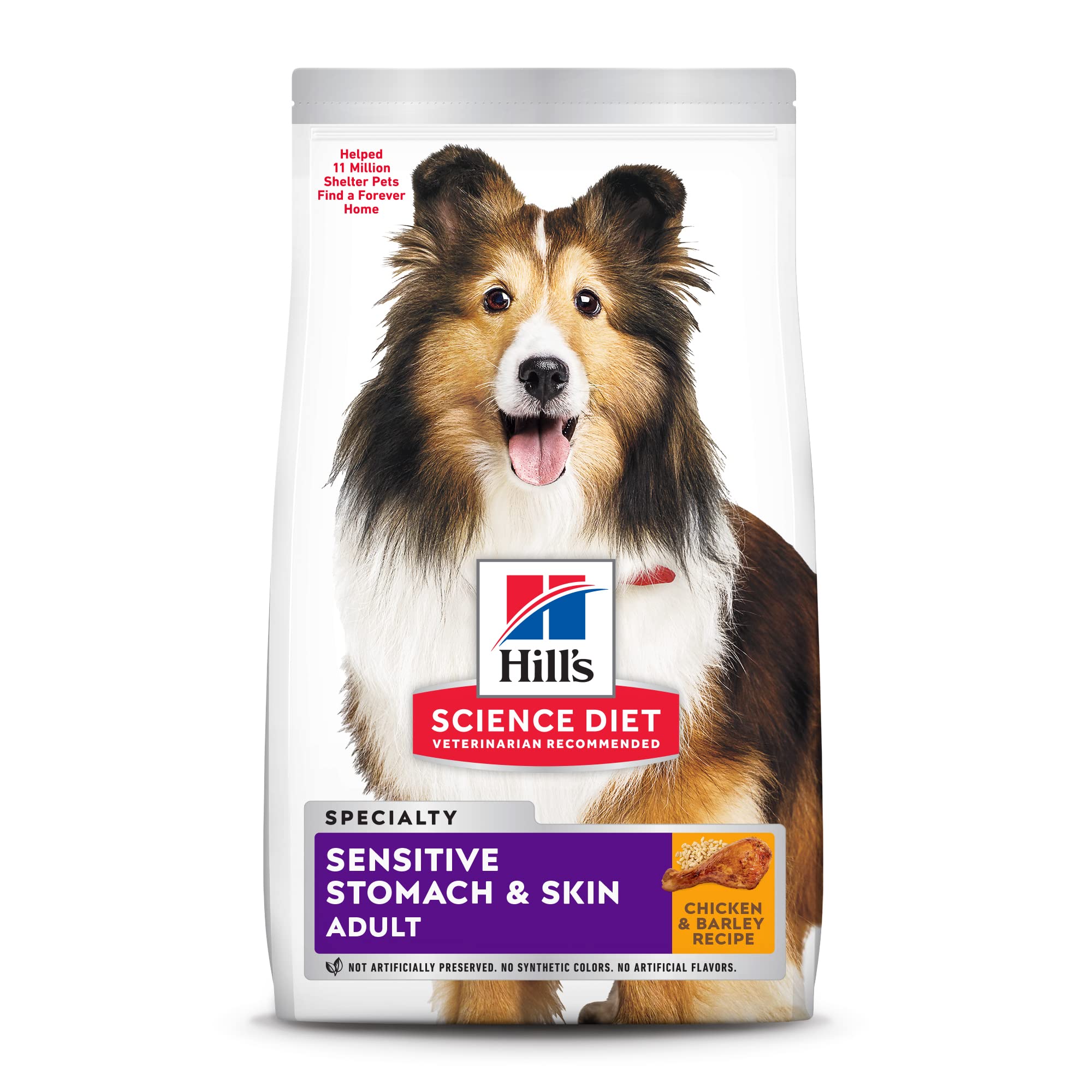
The listing describes this adult food as having prebiotic fiber for digestion and vitamin E with omega-3 and omega-6 fatty acids for skin and coat. It also states that chicken is the number one ingredient. Merck and VCA both list chicken among the most common food allergens in dogs, so this is the pick to skip if your vet suspects chicken. For a Shepherd with no known chicken problem and mild skin or stomach sensitivity, it is a mainstream adult food with a skin label. It is not a trial diet.

Salmon is the first ingredient, and the listing names omega-3 and omega-6 fatty acids for skin and coat. It also states no chicken or poultry by-product meals and no corn, wheat, or soy. Blue Buffalo says the True Solutions line was formulated by veterinarians and animal nutritionists. The listing is for an 11 pound bag, which is a small bag for a large breed, so compare the cost per pound with the larger bags below.

This is the only food on the list made for large adult dogs, which fits a Shepherd's size. The listing puts salmon first, adds omega-6 fatty acids for skin and coat, and lists glucosamine and EPA for joints. For digestion it names natural prebiotic fiber and easily digestible oatmeal. Because it includes oatmeal, it is not a grain-free food, which matters if a vet is steering your dog away from grains for a specific reason.

This is the puppy option. The listing names turkey as the first ingredient, DHA for brain and eye development, and no chicken or poultry by-product meals and no corn, wheat, or soy. Puppies are a special case for a vet-guided trial. Tufts notes that very few novel ingredient or hydrolyzed diets meet the special nutritional needs of growing puppies, so a Shepherd puppy with itchy skin needs a vet visit before any diet change.
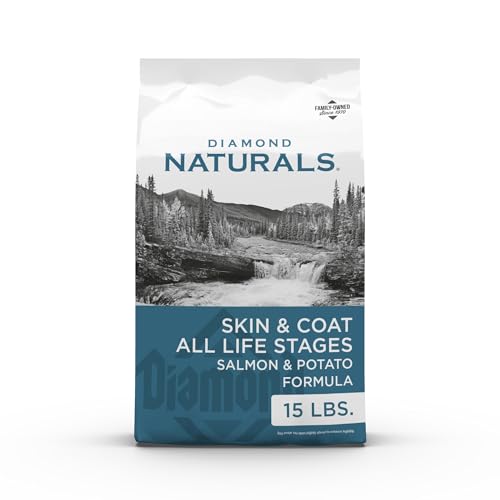
The listing says real salmon is the first ingredient, with omega fatty acids for skin and coat, and that the formula suits dogs from puppy to senior. It also names species-specific probiotics, called K9 Strain, for digestion. The 15 pound bag on this listing is the smallest on the page, and an adult Shepherd goes through it quickly.

The listing calls this a smoke-flavored salmon recipe with real fish as the first ingredient and 32 percent protein. It names omega fatty acids for skin and coat and the same K9 Strain probiotics as the Diamond food. The 28 pound bag is the largest on the page. Read the full ingredient panel on the bag before you buy if you are avoiding a specific ingredient.

This one is built around a single animal protein, salmon, and the listing also calls it grain-free, with support for skin, coat, and sensitive stomachs. Natural Balance describes it as vet recommended. A short ingredient list makes it easier to see what a dog is eating, which is the reason people reach for this style of food. It still carries two cautions covered below: store-bought limited ingredient foods are not trial-grade, and grain-free foods are part of an FDA investigation, so ask your vet before making one a long-term food.
Start with the protein. Merck lists beef, dairy products, chicken, wheat, and lamb as the most common food allergens in dogs, and VCA names dairy, beef, chicken, eggs, soy, and wheat gluten. VCA says food allergies usually show up after long exposure to one brand, type, or form of food, so a dog can start reacting to a protein it has eaten for years.
Most advice for dogs with skin allergies starts with the ingredient list, and the details are worth checking.
Finding the best dog food for skin allergies means cutting out the usual triggers (chicken, corn, wheat, soy) and loading up on ingredients that actively support coat and skin health. Think omega fatty acids, novel proteins like salmon or venison, and limited ingredient formulas that reduce the number of potential allergens hitting your dog's system at once. A solid example that checks all those boxes is Nextrition Salmon Cold-Pressed Dog Food, which uses salmon as the primary protein and keeps the ingredient list short enough to actually identify what's working (or not) for your dog.
Many pet parents also switch to wheat free dog food when managing allergy symptoms, since wheat can be a common trigger for sensitive dogs. Removing potential irritants while focusing on high-quality proteins and skin-supporting nutrients can significantly reduce flare-ups.
Two details sharpen that advice. The first is that "novel" depends on the dog. Tufts explains that a novel ingredient is one your pet has never eaten, and that what is novel for one dog may not be novel for another. If your Shepherd has already eaten salmon foods, salmon is not novel. Merck adds that there is some experimental evidence of cross-reactivity between chicken, whitefish, and salmon, though it says the clinical meaning of that is not yet clear. Carbohydrates count as well, because Tufts points out that rice, corn, peas, potatoes, and even brewer's yeast contain protein, and protein is what triggers an allergy.
The second is that a store-bought "limited ingredient" label is not a promise. VCA says retail foods are not made with the same protocols to prevent cross-contamination that veterinary diets use. Tufts says studies have found high rates of contamination with common proteins in over-the-counter allergy and limited ingredient diets, and that many of them contain more ingredients than the name suggests. A food from the list above can be a reasonable everyday food for a dog with mild sensitivity. For diagnosing an allergy it is the wrong tool.
Whether to pick a grain-free food is a question for your vet. In 2018 the FDA began investigating reports of dilated cardiomyopathy, a serious heart disease, in dogs eating foods labeled grain-free that had a high proportion of peas, lentils, other legume seeds, or potatoes as main ingredients. The agency says the link is a complex scientific issue that may involve multiple factors, and that reports alone do not establish a cause. Merck's veterinary manual says some sources suggest it may be prudent to avoid diets that list pulses among their top 10 ingredients. Grain-free is not required for a skin allergy, because wheat and corn are only some of the possible triggers.
VCA lists three kinds of hypoallergenic diet that a vet can prescribe: a veterinary hydrolyzed protein diet, where the protein is broken into pieces too small for the immune system to recognize, a veterinary novel protein diet, and a home-prepared novel protein diet formulated by a veterinary nutritionist. These are available from your veterinarian. They are the usual choice for an elimination diet. Tufts says that for dogs with skin disease, most veterinary dermatologists recommend an extensively hydrolyzed diet for the trial.
An elimination diet is the way a food allergy is confirmed or ruled out. It needs a vet, because the diet has to fit your dog's history, age, and health, and because the wrong choice wastes weeks. Merck says your veterinarian should be consulted to develop a specific test plan, and Tufts says it is very important to talk to your vet about which diet is right for your pet.

If the itching does not improve on a carefully done trial, a food allergy becomes less likely, according to Tufts, and the vet can look at the other causes. Parasite control belongs on that list. For worm treatments, see our guide to dewormers for German Shepherds.
| Source | Most common food allergens in dogs |
|---|---|
| Merck Veterinary Manual (professional) | Beef, dairy products, chicken, wheat, lamb. Less common: soy, corn, egg, pork, fish, rice |
| Merck Veterinary Manual (pet parent) | Beef, chicken, eggs, corn, wheat, soy, milk |
| VCA Animal Hospitals | Dairy, beef, chicken, chicken eggs, soy, wheat gluten |
Some are. Chicken is on the common allergen lists from both Merck and VCA, and Merck says German Shepherds appear to be overrepresented among dogs with food allergy in most Western countries. Many dog foods include chicken or chicken fat, so a dog can be exposed for years. Whether yours reacts to it can only be confirmed with a vet-guided elimination diet and a challenge. A blood test will not answer it.
Three causes come up most. Food allergy is one, airborne allergy to things like pollen and mold is another, and flea allergy is the third. Merck says airborne allergies are more common than food allergies, and VCA says many dogs with a food allergy also have an airborne or flea allergy. Itching that continues all year points more toward food, and itching that follows the seasons points more toward the air, though Merck notes airborne signs can also last all year. A vet can sort out which one applies.
For a proper trial, plan on 8 to 12 weeks, and up to 3 months in Merck's pet parent guide. A switch to an ordinary retail food is not a trial, so it cannot tell you much even if the itching eases. If the skin is raw, bleeding, or smelly, or the ears are red, see the vet first because infections need treatment on their own.
No. They are everyday foods with skin and coat or sensitive skin labels. A vet decides whether a dog needs a trial diet, and which one.
Food details come from each product's Amazon listing.
More German Shepherd guides: Tactical Harness for German Shepherds, Nail Grinder for German Shepherds, and Names for German Shepherds.
READ NEXT: Best Bones for German Shepherds: Top Picks for Your Dog's Enjoyment
Leave a comment