
Your Purchase Helps
shelter pets in need
Each order helps pets in need
shelter pets in need
Each order helps pets in need

Guinea pigs spend their entire lives in their cage, so the bedding you choose matters more than most people realize. It's not just a surface to walk on. Good bedding absorbs urine, controls ammonia buildup, and protects your guinea pig's sensitive respiratory system from irritation. Bad bedding can cause upper respiratory infections, bumblefoot, and skin problems that lead to expensive vet visits.
The biggest mistake new guinea pig owners make is using cedar or pine shavings. Those wood types contain aromatic oils called phenols that are toxic to small animals over time. Paper bedding and kiln-dried aspen are the safe options, and the six products on this list all fall into those categories. If you're still setting up your guinea pig cage, getting the bedding right from the start will save you headaches down the road.
I compared the most popular guinea pig beddings on Amazon based on absorbency, dust levels, odor control, and overall value. Whether you're looking for the softest paper bedding for a spoiled piggy or a budget-friendly wood option that gets the job done, there's something here for every setup.

Kaytee Clean & Cozy has been a staple in the guinea pig world for years, and for good reason. It absorbs up to 6x its weight in liquid, which means less frequent cage cleanings and better odor control between changes. The white color is a practical choice too. You can actually see when areas are soiled, so you know exactly where to spot-clean instead of dumping the entire cage.
The texture is soft and fluffy right out of the bag. Guinea pigs love burrowing into it, and it expands quite a bit when you fluff it up. A 49.2-liter bag goes further than you'd expect. For a standard C&C cage, one bag usually lasts through two or three full changes depending on how deep you layer it.
The one thing to watch for is dust. Kaytee says it's 99.9% dust-free, and it's definitely better than wood shavings, but some bags are dustier than others. If your guinea pig has sensitive respiratory issues, give the bedding a good shake before spreading it in the cage. Most owners don't have any problems, but it's worth mentioning.
Pros
Cons
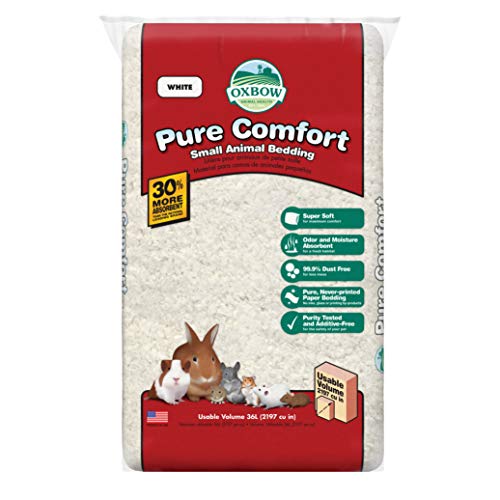
Oxbow is one of the most trusted names in small animal care, and their Pure Comfort bedding reflects that reputation. It's made from 100% pure paper fiber with no dyes, inks, or chemicals. For owners who are cautious about what goes into their guinea pig's habitat, that purity matters. Guinea pigs chew on everything, bedding included, so knowing there's nothing harmful in there gives you peace of mind.
Absorbency is where this bedding really shines. It holds moisture better than most competitors, which translates directly to less smell between cage cleanings. The fibers are longer than typical paper bedding, so they interlock and create a more stable surface. Your guinea pigs won't sink through to the cage floor the way they sometimes do with shorter-fiber brands.
Price is the main sticking point. Oxbow charges a premium, and you'll feel it if you have a large cage or multiple guinea pigs. The quality justifies the cost for most owners, but if you're on a tight budget and going through bedding quickly, there are more affordable options on this list that still do a solid job.
Pros
Cons
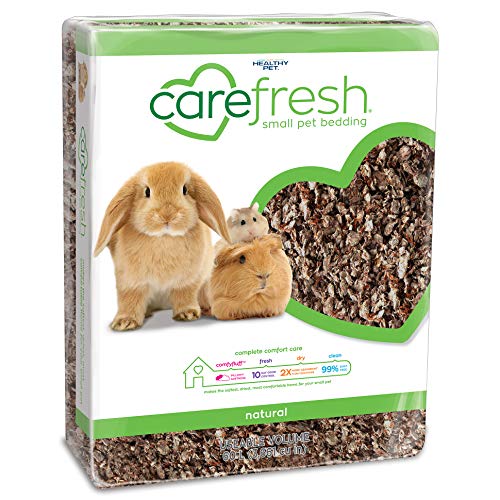
Carefresh has been around since the early days of paper bedding, and the Natural formula is their flagship product. It's made from reclaimed wood pulp fibers that never went through the paper-making process, so there's no ink residue or chemical contamination. The natural brown color looks clean in the cage and hides stains better than white bedding, which some owners actually prefer.
The 60-liter bag is a good value for the amount you get. Carefresh expands significantly when fluffed, so you're getting more usable volume than the bag size suggests. Odor suppression lasts about 10 days in my experience, which is right in line with what they advertise. For a two-pig cage, you'll want to do spot cleaning every couple of days and a full change weekly.
Dust levels are low but not zero. Carefresh uses a dust-removal process during manufacturing, and it shows. Compared to wood shavings, there's no contest. Compared to the very best paper beddings like Oxbow, it's close but not quite as clean. For most guinea pigs, the difference is negligible. Only pigs with diagnosed respiratory conditions might notice.
Pros
Cons
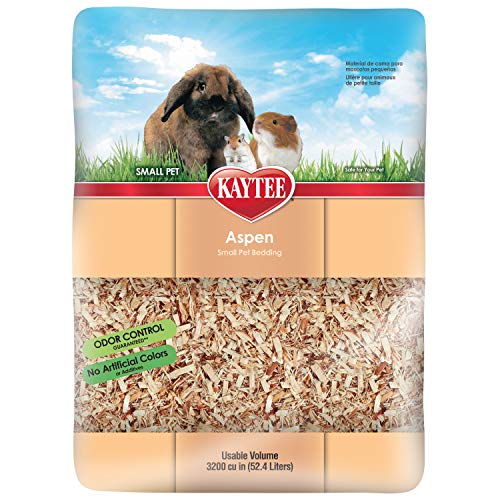
If you prefer wood bedding over paper, aspen is the only safe wood option for guinea pigs. Cedar and pine contain aromatic oils (phenols) that can damage a guinea pig's respiratory system and liver over time. Aspen doesn't have those oils, which makes it the go-to choice for wood bedding fans. Kaytee's version is kiln-dried to reduce moisture content and processed to minimize dust.
Aspen has a pleasant, mild wood scent that naturally helps with odor. It doesn't absorb quite as well as paper bedding, so you'll need to change it more frequently, but the trade-off is that it's usually cheaper per bag. It also holds its shape better under foot traffic. Paper bedding compresses and gets soggy in high-traffic areas, while aspen shavings maintain more loft.
The downside is messiness. Wood shavings are lighter and more prone to scattering. Your guinea pigs will kick them out of the cage, and you'll find little wood curls on your floor. It's also not as soft as paper bedding, so guinea pigs that like to burrow and nest might not find it as comfortable. Think of aspen as the practical, budget-friendly choice rather than the luxury option.
Pros
Cons
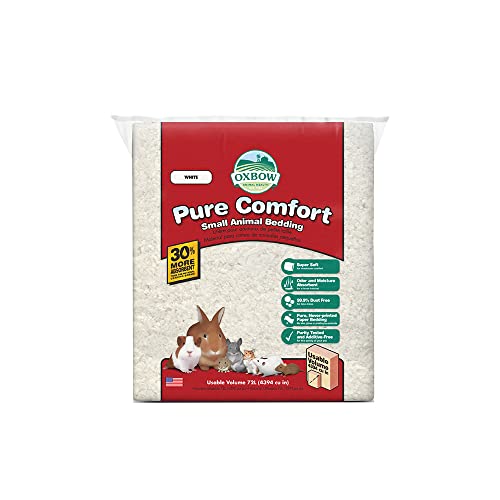
This is the larger, white version of Oxbow's Pure Comfort line. At 72 liters, it's sized for owners with bigger cages or multiple guinea pigs who go through bedding quickly. The white color gives you the same spot-cleaning advantage as Kaytee's white bedding, letting you see exactly where moisture has collected so you can target those areas without replacing everything.
Oxbow's manufacturing process is genuinely impressive when it comes to dust control. They run the fibers through multiple screening steps, and you can tell the difference when you pour it into the cage. There's almost no airborne dust. For guinea pigs with chronic respiratory issues or for owners who keep the cage in a bedroom, that dust-free quality is a big deal.
The 72-liter bag is the best value in the Oxbow lineup, but it's still pricier per liter than Kaytee or Carefresh. If you're running a large C&C cage (2x5 grids or bigger), the cost adds up fast. Some owners use Oxbow in the kitchen and sleeping areas where their pigs spend the most time, then fill the rest of the cage with a cheaper bedding. That hybrid approach works well if budget is a concern.
Pros
Cons

Carefresh's white bedding combines the brand's proven paper formula with a bleached white color for easy spot-cleaning. The white fibers go through an additional dust-extraction step compared to the natural version, making this one of the cleanest-pouring beddings you can buy. If dust was your complaint with standard Carefresh, this version addresses it directly.
Performance-wise, it's very similar to the natural Carefresh but with better visibility for maintenance. You can see urine spots immediately, which makes daily spot-cleaning faster and keeps the cage fresher between full changes. The absorption rate is solid, holding moisture well and suppressing ammonia odor for about a week before things start to get noticeable.
The white color does come with a cosmetic downside: it looks dirty faster than the natural brown version, even when the bedding is still functionally clean. Some owners find themselves changing bedding more often than necessary just because it looks stained. Try to judge by smell rather than appearance, and you'll get more mileage out of each bag. Price is slightly higher than the natural version, but the difference is small enough that most owners don't mind.
Pros
Cons
Paper bedding is the most popular choice for guinea pigs because it's soft, highly absorbent, and produces minimal dust. Brands like Kaytee, Oxbow, and Carefresh dominate this category. Wood bedding (aspen only, never cedar or pine) is a budget-friendly alternative that offers natural odor control but doesn't absorb as well. Fleece liners are a reusable option that some owners swear by, but they require daily spot-cleaning and frequent washing. Each type works, but paper bedding hits the best balance of convenience, comfort, and safety for most guinea pig owners.
Guinea pigs have delicate respiratory systems. Dusty bedding can trigger sneezing, wheezing, and upper respiratory infections that are serious if left untreated. Always look for bedding labeled "dust-free" or "99.9% dust-free." Even within that category, some brands perform better than others. When you open a new bag, pour slowly and watch for visible dust clouds. If you see a lot of particles in the air, that bedding isn't clean enough for your pig's lungs. Oxbow tends to score highest on dust control, followed by Carefresh White and Kaytee Clean & Cozy.
Absorbency determines how long your bedding lasts between changes and how well it controls ammonia smell. Paper bedding generally absorbs 2 to 6 times its weight in liquid, depending on the brand and fiber density. Higher absorbency means fewer full cage changes, which saves both time and money. Odor control is closely tied to absorbency. The faster bedding soaks up urine and locks it away from the surface, the less ammonia builds up in the air. If you can smell the cage from across the room, your bedding isn't absorbing well enough or it's overdue for a change.
Bedding is an ongoing expense that adds up over the life of your guinea pig (which can be 5 to 7 years). A standard C&C cage needs about 20 to 30 liters of bedding per full change, and most owners do a full change once a week with daily spot-cleaning. That means you'll go through roughly 80 to 120 liters per month. At that volume, even small price differences between brands become significant. Buying larger bags almost always gets you a better per-liter price. Some owners buy in bulk online and store extra bags in a closet to save even more.
Plan on a full bedding change once a week for most setups. Spot-clean soiled areas daily by scooping out wet clumps and replacing them with fresh bedding. If you have three or more guinea pigs in one cage, you may need to do a full change every 4 to 5 days since more pigs means more urine and faster saturation. The smell test is reliable: if you can detect ammonia when you lean over the cage, it's time for a full change regardless of your schedule.
No. Cedar bedding is dangerous for guinea pigs and should never be used. Cedar wood contains phenols, which are aromatic oils that give the wood its distinctive smell. Those same oils cause liver damage and respiratory problems in small animals with prolonged exposure. Pine has similar issues, though kiln-dried pine is considered safer by some owners because the drying process removes most of the phenols. To be safe, stick with paper bedding or kiln-dried aspen. There's no reason to risk your guinea pig's health when proven safe alternatives exist.
Newspaper alone is a poor bedding choice. It doesn't absorb well, it gets soggy quickly, and the ink can transfer to your guinea pig's fur and skin. Some owners use newspaper as a bottom liner under paper bedding to make cleanup easier (just roll everything up and toss it), and that's fine. But newspaper by itself won't control odor, won't keep your pig dry, and provides no cushioning for their feet. Shredded newspaper is slightly better since it has more surface area for absorption, but it still doesn't come close to purpose-made paper bedding.
Aim for 2 to 3 inches of depth across the entire cage floor. That gives your guinea pig enough cushion to walk comfortably and enough absorption capacity to handle urine between cleanings. Going deeper than 3 inches is usually a waste of bedding since the bottom layers rarely get used before you do a full change. Some owners go a bit deeper (up to 4 inches) in the kitchen area where their pigs eat and drink, since that's where most of the mess concentrates. The sleeping area can stay at the standard 2-inch depth.
Leave a comment