
Your Purchase Helps
shelter pets in need
Each order helps pets in need
shelter pets in need
Each order helps pets in need

A hot spot is a red, wet, painful patch of skin that shows up fast and keeps growing while a dog licks it. Vets call it acute moist dermatitis. VCA Animal Hospitals says the sores ooze and may contain pus, and that a pinpoint of redness can become a raw patch the size of a pancake in the time it takes to work a shift. The AKC calls hot spots one of the most common skin conditions in dogs, and the care that works is mostly simple: stop the licking, get the hair clipped, keep the spot clean and dry, and find the itch that started it.
That is not what most home remedy lists say. This page covers the steps veterinary sources give for home care, then goes through the popular remedies one at a time (Gold Bond powder, witch hazel, apple cider vinegar, coconut oil, honey, and oatmeal baths) and says what vets and the product makers say about each. It ends with when to call the vet, which for a hot spot is sooner than most people think.
The AKC describes a hot spot as a well-defined area of redness, swelling, and hair loss that is moist and may leak pus or fluid, which mats the fur around it. The most common places are the head, the legs, and the hips. Some are hidden under matted fur, so part the coat if your dog keeps chewing at one place.
A hot spot can pass for an insect bite at first. The difference is speed: the AKC says a hot spot rapidly worsens and spreads, and an insect bite does not. A vet visit confirms what you are looking at. Vet visits cost money, so it helps to have knowledge of what the unexpected costs of life with a dog tend to be before a skin problem forces the question.
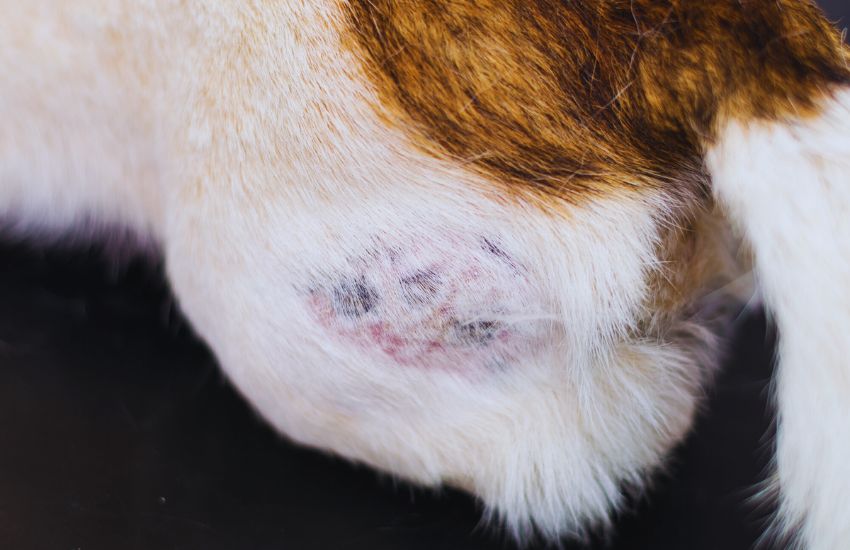
A hot spot starts with an itch that a dog scratches or licks until the skin breaks. The itch is the real problem to solve. A clinic page edited by veterinary dermatologist Andrew Hillier lists flea allergy as the most common underlying cause, followed by other allergies, parasites, ear infections, and anal gland disease. VCA adds a few more causes you can see at home:
Thick-coated breeds get them more often. Hillier's page names Golden Retrievers, Saint Bernards, Labrador Retrievers, German Shepherds, and Rottweilers. The AKC adds that hot spots are more common in warm, humid weather and in dogs that are often wet from swimming or baths.
VCA puts this first: the goal is to stop the trauma so the skin can recover. Its options are an Elizabethan collar (a cone), covering the spot with a sock or bandage as a barrier, and medication from the vet to calm the itch. The AKC lists a cone or a recovery suit for dogs that get around a cone. Our guide to cone alternatives for dogs covers soft collars and recovery suits.
VCA calls clipping the hair away from the spot and the skin around it the key to success, because the lesion dries and heals faster when air reaches it. It advises a groomer who knows clippers and says not to use scissors, since scissors can cut a dog's skin and turn a hot spot into a wound that needs stitches. After clipping, VCA says the lesion should be disinfected with a chlorhexidine solution. Hillier's page lists clipping, a gentle clean with a mild antiseptic such as chlorhexidine, and then a drying product. He says the vet may send you home with a drying solution to use for a few days until the spot is dry and no longer itchy. Use only what your vet names, and follow the directions on that product.
VCA also says to ask your vet before using any medication made for people, because many are toxic to dogs.
Hillier's page says recurrence is common when the cause is never found. Monthly flea control is the first thing VCA lists, and our guide to the best flea treatments for dogs compares the options. Allergies, ear infections, and anal gland problems need a vet. Boredom licking calls for more exercise and enrichment.
Homemade treatments can feel like fantastic alternative options when the vet is closed. Our dog life hacks guide has plenty of them for everyday chores like homemade treats, but a skin wound is different. None of the remedies below appears in the veterinary pages on hot spots, so each one is rated by what a named source says about it. You might also like Dog Constipation Home Remedy.
Gold Bond is the remedy people search for most, and the maker is clear about it. The product page for Gold Bond Original Strength Medicated Body Powder says: "This product has not been tested on animals, and we advise against use on pets." Its active ingredient is menthol at 0.15 percent, and the ingredient list includes zinc oxide and methyl salicylate. The label says to contact Poison Control if it is swallowed.
A hot spot is a spot a dog licks, so swallowing is the realistic risk. Pet Poison Helpline lists zinc oxide skin products such as diaper rash cream among the causes of zinc poisoning in dogs, and VCA says many human medications are toxic to dogs. If a powder or spray seems like a good idea, ask your vet to name a product made for dogs.
PetMD's article on witch hazel shows a real split among vets. It says conventional vets do not recommend it to pet parents, either because they lack experience with it or because no rigorous studies back it. A holistic vet quoted there uses it for the itch of insect bites. The same article warns that most store witch hazel is made with isopropyl alcohol, which is toxic if swallowed, so a dog that licks it is at risk.
Using witch hazel on your dog's hot spots requires some careful application. Simply soak a clean cloth or cotton ball in witch hazel and apply it directly to the hot spot. Note: You'll want to avoid any open wounds, as this can sting!
Since VCA describes hot spots as raw, oozing sores, that warning rules out many of them. Ask your vet before using it at all.
The veterinarians who reviewed Chewy's article on apple cider vinegar say there is no real benefit of apple cider vinegar for dogs and that because of its acidity it can do more harm than good. They list skin irritation as a risk when it is applied to the skin, especially if undiluted. That article is not about hot spots, but a hot spot is already irritated skin, so vinegar is a poor fit.

The AKC says coconut oil is often used as a moisturizer for a dog's skin and coat. It also says coconut given as a treat or food topper may help the skin of a dog with skin irritations and will "support the healing of cuts, hot spots, and other wounds." That claim is about eating coconut, not putting oil on the spot. The vet quoted on the same page says there is better data for omega fatty acids, like fish oil, for skin health. The Merck Veterinary Manual says local ointments, gels, and sprays are best used sparingly so a dog does not lick off excessive amounts, which is a problem for any oil on a spot a dog is already licking.
One review of honey's natural antibacterial properties reports antibacterial activity and moist wound healing, but it covers honey in human medicine and lab tests, not dogs. On the dog side, the AKC says there are not many conclusive studies behind claims for honey, and that many of them are anecdotal. No vet source here gives honey for a hot spot.
A veterinary clinic in Greensboro describes an oatmeal bath as one at-home remedy that can help calm minor itches, and says more serious issues need a vet. That page does not mention hot spots. Hillier and VCA both want a hot spot clipped and dried, and a long soak points the other way, so ask your vet before bathing a dog that has one. An oatmeal bath is better kept for general itchy skin once the vet has cleared the hot spot.
The AKC says the first step is to consult your veterinarian, and that waiting for a hot spot to resolve on its own only makes the problem worse. Hillier's page says the self-trauma can produce lesions of 10 centimeters or more within hours. Some dogs become depressed when the pain is severe, and some run a fever.
Call the vet right away when you see any of these:
A virtual visit can be a first step: our guide to tele-vet visits for dogs lists hot spots among the problems that suit a virtual appointment, and says to seek hands-on care right away if your dog is in distress. The AKC says that once treatment starts, many hot spots resolve in as little as three to seven days.

Prevention follows the causes. Brush often, especially dogs with long or thick coats, since VCA says matted fur holds water against the skin. The AKC says to dry the coat thoroughly after every swim or bath. Keep up monthly flea control, and have the vet manage allergies and ear problems. For dogs that lick from boredom, VCA suggests more exercise and enrichment. Regular grooming helps with the brushing part.
Embrace your inner puppy & shop our entire dog merch, with 25% of all proceeds going directly to no-kill animal shelters!
Only in part. Home care means stopping the licking with a cone or a barrier and keeping the spot dry, but the AKC says to consult your vet first, because a vet needs to find the cause and may prescribe medication.
Gold Bond says its Original Strength powder has not been tested on animals and advises against use on pets. Ask your vet for a product made for dogs.
A dog scratches or licks an itchy spot until the skin breaks. Fleas, allergies, ear infections, matted fur, and boredom licking are the usual starting points.
A vet typically clips the hair, cleans the area with an antiseptic such as chlorhexidine, may prescribe anti-itch or anti-inflammatory medication or antibiotics, and looks for the cause so the spot does not return.
The AKC says many hot spots resolve in as little as three to seven days after treatment starts.
Leave a comment