
Dog Behavior: The Complete Handbook for Dog Parents
Why your dog leans on you, moans at the ceiling, picks one person, follows you to the bathroom, and eats the lawn. The whole catalogue of ordinary dog weirdness, explained, plus the short list of behaviors that are actually telling you something is wrong.
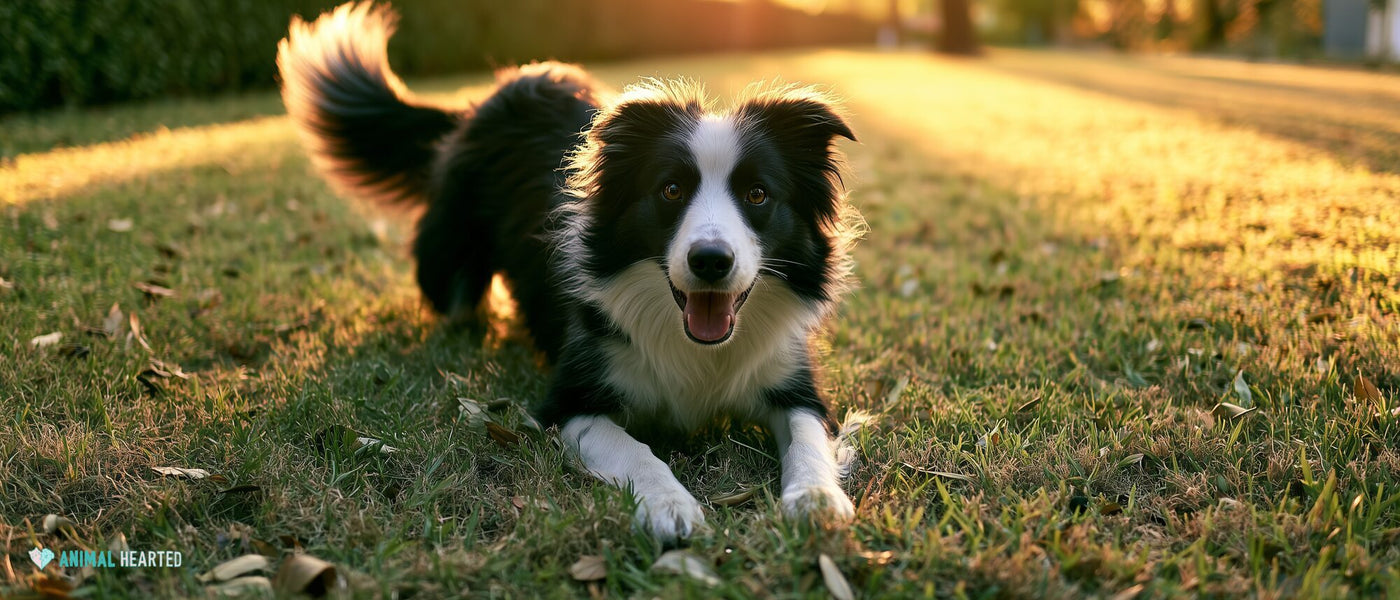
Almost every question a dog parent types into Google at 11pm is a behavior question. Why does she sleep on me and not him. Why does he groan like an old man when he lies down. Why does she follow me into the bathroom, every single time, even though nothing interesting has ever happened in there. The answers are rarely dramatic. Dogs are running old software on a species that moved into our houses, and most of what looks strange is either communication we are not fluent in yet, or a leftover instinct with nowhere useful to go.
This handbook gathers everything we have written about dog behavior and puts it in the order it actually matters. Start with chapter one, because reading a dog's body is the skill that makes every other chapter make sense. Then work through the specific weirdness. Chapter six is the one to bookmark: it is the short list of behavior changes that are not behavior problems at all, but health problems wearing a costume.
Read the body, not the behavior
People tend to interpret a dog the way they would interpret a person, and that is where most of the confusion starts. A wagging tail is not a smile. It means arousal, which can be joy or can be a dog winding up to react. What matters is the rest of the picture: where the tail sits (high and stiff is a different animal from low and loose), whether the mouth is soft and open or clamped shut, whether the ears have gone flat, and whether you can see a crescent of white in the eye. That white crescent, whale eye, is the single most reliable "I am not okay with this" signal a dog gives, and it is the one that gets ignored most often in photos of toddlers hugging the family dog.
It also helps to know what your dog is working with. Their eyes are built for motion and low light rather than detail and color, which is why a still deer goes unnoticed and a plastic bag skittering across a parking lot is a genuine event. We break down the whole system in what dogs actually see through their eyes, and if you want the stranger question, the one about what is going on behind those eyes, what dogs think about covers what the research can and cannot tell us.
The practical version: before you ask why your dog is doing something, look at the body doing it. Loose and wiggly means one thing. Stiff and still means another. Same behavior, opposite meaning.

Why your dog sticks to you
The most-read guide on this entire blog is about a dog choosing one person's bed over another's, which tells you how much this one bothers people. The short version is that dogs are not weighing who loves them more. They are pooling the evidence they care about: body heat, scent, who is stationary at bedtime, who is predictable, and who the dog can hear breathing from across the room. A dog who sleeps pressed against you has decided you are the safest object in the house, and that decision is often made on grounds that feel unromantic. Warmth is a big one. So is whoever goes to bed at the same time every night. The full breakdown lives in why your dog sleeps on you and not your partner.
Leaning and lying across you is a related but separate thing. Dogs sleep in contact with their litter as puppies, and plenty of them never stop wanting that; the weight of a dog draped over your legs is a request to be close, sometimes a request for reassurance, and occasionally a very confident dog claiming the couch. Why dogs lay on you sorts out which one you have on your hands.
Then there is the favorite-person question, which cuts deeper for the family member who did not get chosen. It usually comes down to who feeds, who walks, who trains, and who matched the dog's energy during the socialization window as a puppy. The good news, covered in why dogs pick one person, is that the pick is not permanent. Feed the dog for two weeks and watch the loyalty quietly re-price itself.
What none of this means is that following you room to room is a problem to fix. It only becomes one when the dog cannot cope with you leaving at all, which is chapter five.


The noises
Dogs have a whole vocabulary below the bark, and the low end of it gets misread constantly. The long groan a dog lets out while flopping onto their bed is usually contentment, the canine version of an old man settling into a recliner. The same sound produced while standing still, repeatedly, is not. Groaning that shows up alongside stiffness, reluctance on stairs, or a dog who now takes three tries to lie down is a pain signal, and it deserves a vet rather than a laugh. We walk through the difference in decoding dog moans and groans.
Sighs mostly mean what they sound like. A big exhale as the dog settles is release. A sigh that comes with turning away from you, after you asked for something, is closer to a complaint. Whining is a demand, an anxiety tell, or an old habit that worked once and got reinforced by a treat. And the bark itself is not one sound: the high, rapid alarm bark at a delivery driver has almost nothing in common with the single low boof a dog gives when they are unsure what they just heard.
The rule that saves the most time: pay attention to when a sound is new. A dog who has groaned happily for eight years is fine. A dog who started groaning last month is telling you something changed.

Weird, and completely normal
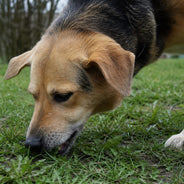
A large share of behavior worry is spent on things that turn out to be fine. Grass eating is the champion. The story everyone repeats is that dogs eat grass to make themselves vomit, and the evidence does not support it: when researchers watched dogs graze, fewer than one in four threw up afterward and only about one in ten looked ill to begin with. Most dogs eat grass because it tastes good, the texture is satisfying, and they are bored. The thing worth worrying about is not the grass, it is what has been sprayed on it. The full grass story, including the lawn chemicals that matter more than the chewing ever will, gets its own guide in this handbook soon.
Marking is the other one that gets moralized. A dog lifting a leg on the same fence post every single walk is not being spiteful or dominant, they are reading and posting to a message board built out of urine, and the information (who came through, how long ago, intact or not) genuinely matters to them. Indoor marking is a different problem with a different fix, and why dogs mark their territory separates the two, because cleaning with the wrong product will keep the habit alive on its own.
Zoomies, head tilts, the circle-three-times ritual before lying down, the deep sniff of another dog's rear end: none of it needs fixing. Almost all of it is inherited machinery running in a suburban house. The bar for concern is not "this is strange," it is "this is new, escalating, or interfering with the dog's life."

Cars, doorbells, and being alone
Behavior tends to fall apart in specific places, and the car is the classic. Some dogs treat it as the best thing that happens all week, because the car reliably ends somewhere good and the window delivers a firehose of scent; that is the version covered in why dogs like car rides. Other dogs drool, shake, and vomit before you reach the end of the street. That is usually two problems stacked: genuine motion sickness (puppies get it worse because the inner ear is still developing) and an association built out of a car that only ever goes to the vet. Both are fixable, and why some dogs hate car rides walks through rebuilding the ride from a parked engine upward.
Being left alone is the harder one. Real separation anxiety is not a dog who sulks when you go; it is panic, and it looks like destruction aimed at exits, drooling, house soiling in an otherwise trained dog, and vocalizing that starts within minutes of the door closing and does not stop. Do not try to fix that with a longer walk and hope. It responds to a graded plan, and often to help from a behaviorist. What environment can do is take the edge off the daily version of the problem: a dog with a den-like place to settle recovers faster, which is the honest case for a calming dog bed, as a support rather than a cure.



When behavior is a health signal
This is the chapter that earns the handbook. Dogs hide pain well, so illness often shows up first as a behavior change, and behavior changes get filed as personality or stubbornness for weeks before anyone calls a vet. The rule is simple: a behavior that is new, and that is not explained by something that changed in the house, is a medical question until a vet says otherwise.
Senior dogs deserve a note of their own. Confusion at night, staring at nothing, and forgetting a housetraining habit held for a decade are not stubbornness, and they are not simply age. Canine cognitive dysfunction is real and there are things that help, but only if someone raises it. If your dog is over eight and the behavior is drifting, that is the appointment to make.
| What you are seeing | How soon |
|---|---|
| Sudden aggression or snapping in a dog who never did it, especially when touched in one spot | Same day |
| Pacing, unable to settle, repeatedly trying to vomit with a hard or swollen belly | Same day, now |
| Staring at walls, getting stuck in corners, or not recognizing the household | Same day |
| New groaning on movement, reluctance on stairs, stiff after rest | This week |
| Hiding, clinginess, or house soiling that appeared out of nowhere | This week |
| Grass grazing, zoomies, head tilts, a new favorite person, ordinary weirdness | No action needed |
Quick answers
Why does my dog follow me everywhere, even the bathroom?
Because you are the most interesting thing in the house and dogs are a social species that evolved to stay with their group. It only becomes a problem if the dog cannot cope when you actually leave, which is separation anxiety, not shadowing. See chapter five.
Is my dog being dominant?
Almost certainly not. The dominance framing came from a flawed captive wolf study the author himself later disowned, and it leads people to punish dogs who are simply scared or unpracticed. Look at what the body is saying (chapter one) and what the dog is getting out of the behavior instead.
My dog eats grass every day. Should I stop it?
Only if the lawn is treated with chemicals, the grazing has turned frantic, or your vet says so. Daily nibbling on clean grass is normal.
How do I know if a behavior change is medical?
Ask whether it is new and whether anything in the home explains it. New plus unexplained equals a vet call, particularly with aggression, confusion, hiding, or noise made while moving. The table in chapter six is the fast version.