
Your Purchase Helps
shelter pets in need
Each order helps pets in need
shelter pets in need
Each order helps pets in need

Cat pheromone diffusers are one of those products that look too good to be true and actually deliver about half the time. They use synthetic copies of the calming pheromones cats produce naturally, and for stressed cats they can take the edge off without any sedatives or supplements. The catch: they don't work on every cat, and the version you pick matters.
Here are the picks worth your money in 2026.
Each pick below targets a different scenario — multi-cat households, single-cat anxiety, travel, and edible alternatives. Pheromone products work best when paired with environmental fixes (extra litter boxes, vertical space, hiding spots), not as a standalone solution. Related reading: Does Feliway Really Help Calm Your Cat?

Feliway Optimum is the newest formulation in the Feliway lineup. It uses an "enhanced" pheromone complex that targets multiple stress responses (urine marking, scratching, hiding, fighting) instead of just one. The starter kit covers a 700-square-foot area for 30 days.
Pros
Cons
If you're starting from scratch and don't know which pheromone product to try, this is the safest pick. Feliway's broader portfolio has the most research behind it, and Optimum is their flagship product. Place it in the room where your cat spends the most time and let it run for a full 30 days before judging effectiveness.
Most owners see changes within the first week if it's going to work at all. If you're at 30 days with no improvement, the diffuser isn't matching your cat's specific stress profile and a different product is worth trying.

Specifically formulated for households with two or more cats. Feliway MultiCat uses a different pheromone analog (a synthetic copy of the cat appeasing pheromone produced by nursing mothers) that signals safety and group bonding. Designed to reduce inter-cat tension.
Pros
Cons
This is the diffuser for households where the cats fight, chase, or refuse to share resources. If your two cats hiss at each other every time they cross paths in the hallway, Feliway MultiCat is a meaningful intervention.
Most users see results in 2 to 4 weeks. Pair with environmental changes (multiple litter boxes, vertical territory, separate feeding stations) for the strongest effect.
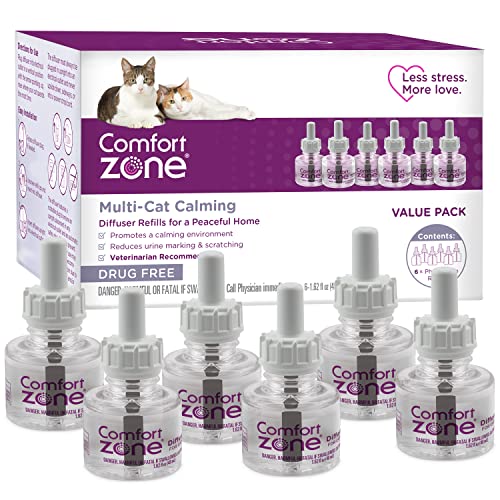
The budget-friendly alternative to Feliway. Comfort Zone uses a similar pheromone approach at a lower price point, especially when bought as a 6-pack of refills (six months of coverage).
Pros
Cons
The math here is simple. If Feliway works for your cat, the cost difference adds up over years of continuous use. Comfort Zone runs about 30 to 40% less and many cats respond similarly. We've used both. The honest take: Feliway is more reliable but Comfort Zone is good enough for most households at a meaningful savings.
If you've already verified your cat responds to pheromone diffusers, the 6-pack refill is the right move. If you've never tried diffusers before, start with Feliway to confirm your cat is a responder, then consider switching to Comfort Zone for ongoing cost.

The travel and spot-treatment pick. Pet Remedy uses essential oils (valerian, vetiver, basil, sage) instead of synthetic pheromones. The spray works for cats and dogs and is portable, which makes it useful for carrier rides, vet visits, and short-term stress events.
Pros
Cons
Pet Remedy is the right pick if you need targeted, short-duration calming. Spray a carrier 15 minutes before a vet trip, spray a bedding area before a thunderstorm, spray a new room when introducing a cat to it. Don't expect it to replace a continuous diffuser for chronic anxiety.
Some cats love the scent and seek out sprayed areas. Some hate it and avoid them. Test on a small surface (a corner of a blanket) before spraying anything you can't easily un-spray.

The edible alternative for cats that don't respond to airborne pheromones. Sentry Calming Chews combine pheromones with calming nutrients (L-theanine, chamomile) in a soft chew format. Different delivery, same general goal.
Pros
Cons
Cats that don't respond to airborne pheromones sometimes respond to ingested calming compounds. The science is softer than for the diffusers (L-theanine and chamomile have mild calming effects in humans, with limited cat-specific research) but the worst case is that your cat enjoys a treat.
Pair with a diffuser for cats facing big stressors (move, new family member, ongoing inter-cat tension). The combination tends to work better than either alone for tough cases.
Cats produce natural facial pheromones from glands on their cheeks and chin. When they rub their face on furniture, doorways, or you, they're depositing these pheromones — essentially marking the area as "safe and known." Synthetic pheromone diffusers are lab-made copies of these compounds.
The two main pheromone classes used in cat products:
Cats can't smell these consciously the way they smell food. The pheromones bind to receptors in the vomeronasal organ (a special chemical-sensing structure in the roof of the mouth) and influence behavior subconsciously.
For multi-cat households, pheromones work best when the home setup supports them. Our multi-cat household tips cover the territory, litter box, and feeding changes that reduce daily friction.
Pheromone products won't fix everything. Skip them or pair them with other interventions when:
For chronic severe anxiety, talk to your vet. Sometimes prescription anti-anxiety medication (gabapentin, fluoxetine) is the right tool, especially short-term during major life changes.
Pairing diffuser type to situation:
| Situation | Best pick |
|---|---|
| New cat introduction | Feliway MultiCat in shared space, started 2 weeks before |
| Single anxious cat | Feliway Optimum or Classic |
| Multi-cat fighting | Feliway MultiCat continuous use |
| Vet trip stress | Pet Remedy spray on carrier, calming chew before departure |
| Moving to new home | Feliway Classic in primary cat space, set up before cat arrives |
| Fireworks or thunderstorm anxiety | Sentry Calming Chew + Pet Remedy spray on bedding |
| Long-term cost-conscious owner | Comfort Zone refills |
Pheromones support environmental change. They don't replace it. The biggest environmental factors for cat stress:
If scratching is the main stress behavior, pair the diffuser with a better scratching setup. Start with our guide to why cats scratch furniture and carpets.
Yes, for about 60 to 70% of cats. The other 30 to 40% don't respond, either because their stress isn't pheromone-responsive or they're individual non-responders. Most owners know within 2 to 4 weeks if their cat is in the responder group.
Some cats show changes in the first week. Most owners report effects within 2 to 4 weeks of continuous use. If you're at 30 days with no change, the product isn't matching your cat's stressors.
Generally yes. Feliway is safe for cats of all ages. Sentry chews and oral supplements have minimum age guidelines (usually 12 weeks).
No. Adaptil (the dog version) uses a different synthetic pheromone that has no effect on cats. Get a cat-specific product.
Yes. Pheromone diffusers work on a continuous-low-dose model. Turning them off at night or during the day reduces effectiveness. Most are designed for unbroken 30-day use per refill.
Yes, especially in multi-cat households. Feliway Classic and Feliway MultiCat target different stressors and can be used in different rooms simultaneously. Combining diffuser plus spray for travel days works well.
Cats can't consciously smell synthetic pheromones, but some respond to the warmth and faint vapor of plug-in diffusers and may rest near them. That's a positive sign — they're seeking the safe-territory signal.
About a third of cats don't. If two different products run for 30 days each show no effect, focus on environmental changes (more litter boxes, vertical space, predictable routines) and talk to your vet about anti-anxiety medication options if the stress is severe.
Shop gifts and apparel for cat lovers. 25% of proceeds go to animal rescues and sanctuaries.
Leave a comment