
Your Purchase Helps
shelter pets in need
Each order helps pets in need
shelter pets in need
Each order helps pets in need

The Maine Coon is the largest of all pedigreed cats, according to the Cat Fanciers’ Association (CFA), and it has a heavy, shaggy coat. The CFA, The International Cat Association (TICA), and the Governing Council of the Cat Fancy (GCCF) all describe it as a gentle or friendly cat. Below you will find how big a Maine Coon gets, what the coat is like, how the breed behaves with children and dogs, what care it needs, and the health conditions that the registries and Cornell’s veterinarians name.
The CFA calls the Maine Coon “the largest of all pedigreed cats” and says: “While it is not unusual for a mature male’s weight to reach or exceed 20 pounds, females are usually smaller.” It also says this is “a slow-maturing breed that can take up to three years to reach full growth,” and that “Maines are larger than many small dogs.”
TICA gives adult males healthy weights “usually around 18 to 22 pounds,” and says females are typically somewhat smaller at 12 to 15 pounds. It says Maine Coons “don’t typically reach full maturity until they are 4 years of age.” Further down the same page, TICA’s breed description says male cats average 13 to 18 pounds at maturity and females average 9 to 13 pounds, and that Maine Coons “don’t achieve their full size until they are three to five years old.”
The GCCF lists the breed’s size as 10 to 20 pounds, says males “can weigh up to 18-20 pounds,” and calls the Maine Coon “the largest domestic breed to be recognised by GCCF.” Its page says the Guinness World Record for the longest cat was a Maine Coon named Barivel, who measured 3ft 11.2 inches from nose to tail tip.
Yes. The CFA describes an adult Maine Coon’s “thick, luxuriant coat” as shorter at the shoulders and longer on the sides, stomach, and back legs, ending in “a dramatically long plumed tail.” The CFA breed standard calls the coat “heavy and shaggy,” with a texture that is “silky with coat falling smoothly.”
TICA describes a semi-longhair glossy coat that is heavy and water-resistant, longer on the ruff, stomach, and britches and shorter on the back and neck. It also says coat type and texture vary: some Maine Coons have “cottony, high maintenance coats that need daily combing and regular grooming,” and others have “a silky coat that doesn’t need as much attention.”
The CFA standard asks for large, well-tufted ears and large, round, well-tufted paws. TICA says early Maine Coons were often polydactyl, meaning they were born with extra appendages on their paws, and that it is believed this helped them use their paws as “natural snowshoes” during snowy Maine winters.
The CFA says the breed’s roots lie in New England, where short-haired ship cats landed with the early settlers, and gives its documented history as going back to the 1850s. A brown tabby named Cosey was chosen Best Cat at the first U.S. cat show in 1895. The CFA gave the breed championship status in 1976.
Several legends explain the long coat. The CFA says the bushy ringed tails of brown tabby Maine Coons prompted a theory that cats had mated with raccoons, which it calls genetically impossible. It also names a tale of Turkish Angoras owned by Marie Antoinette released into the Maine woods and a story of a cat-loving sea captain named Coon. TICA says most breeders today believe the breed came from matings between shorthaired domestic cats and overseas longhairs, perhaps Angora types brought by New England seamen or longhairs brought to America by the Vikings.
The CFA calls Maine Coons “sociable, loyal,” and quite intelligent, and says they get along well with children and other animals, though both could at first be intimidated by its large size. TICA says they generally get along well with kids and dogs, as well as other cats. The GCCF says they “like company and will bond well with another cat or the family dog.”
The registries differ on laps. The CFA says Maine Coons “tend to go from one lap to another, rather than choosing a favorite.” TICA says most are not lap cats but will stay close by you and follow you from room to room.
The GCCF calls the breed high energy and says its size means it needs plenty of room to play. It adds that an assortment of toys and “a very strong climbing frame that will support their weight” will be appreciated. TICA says that if encouraged, most Maine Coons remain playful their whole lives, and that many play fetch or walk on a leash. Read more about scratching posts.
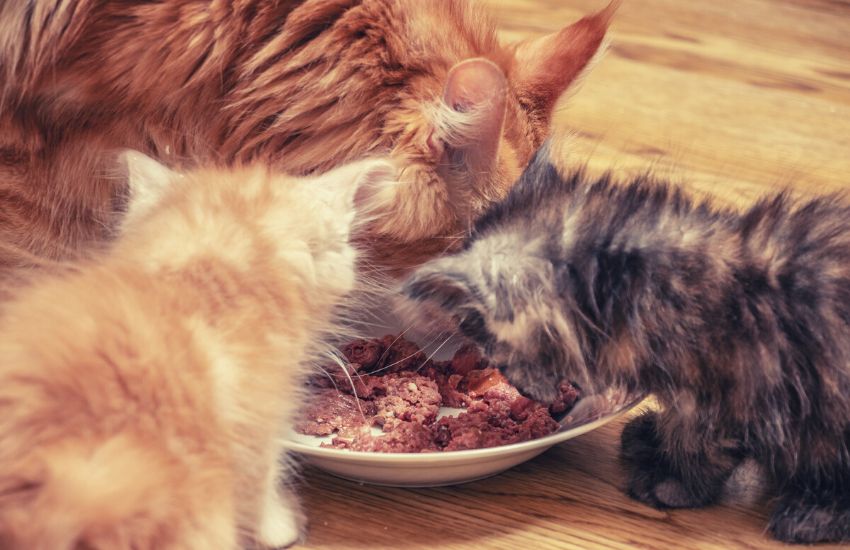
The Cornell Feline Health Center says cats are obligate carnivores, which means they rely on nutrients found only in animal products, and that cats evolved eating prey high in protein, moderate in fat, and minimal in carbohydrates. TICA says the Maine Coon needs proper protein and nutrients and that a “high-quality diet rich in higher protein and lower carbohydrates is recommended.” Cats can synthesize carbohydrates through gluconeogenesis. A 2010 review by Laflamme of Nestle Purina Pet Care Company says in its abstract: “Dietary carbohydrate can efficiently meet cats’ cellular requirement for carbohydrate (glucose), sparing protein that would otherwise be needed for gluconeogenesis.”
The GCCF says care should be taken with their nutrition “as they can have a tendency to become overweight.” TICA says that after spaying or neutering, Maine Coons have a greater tendency to become overweight. Cornell calls obesity the most frequently observed nutritional disorder among domestic cats.
TICA says interactive toys can provide both exercise and bonding time. The CFA says a Maine Coon can work out where you have hidden a preferred toy and dig it out to continue a game. Read more about regular exercise.
The CFA says breeders recommend combing a Maine Coon two or three times a week to control shedding, prevent hairballs, and protect against matting, and that the sessions need not take longer than five or ten minutes. TICA says a weekly combing is all that is usually required to keep the coat in top condition, and that regular combing for all coat textures should start from a kitten age and continue throughout the cat’s life.
The GCCF says Maine Coons can shed quite heavily in the spring, when extra care is needed to remove old, dead coat, and that their large ears should be checked regularly to ensure they are clean. TICA says some find it easier to keep a Maine Coon in a “lion cut” than to keep up with daily grooming. For nails, TICA says to trim them once a week in a kitten and every two to three weeks in an adult, and recommends regular teeth brushing: “Talk to your vet for instructions and suggestions.”
The CFA says most Maine Coons do not require regular bathing, but an occasional bath will add to the breed’s natural beauty. If you plan to bathe your cat, the CFA says to consult your breeder for the right products, and adds that every coat is slightly different. TICA says most Maine Coons like water and that a Maine Coon will happily take a bath.
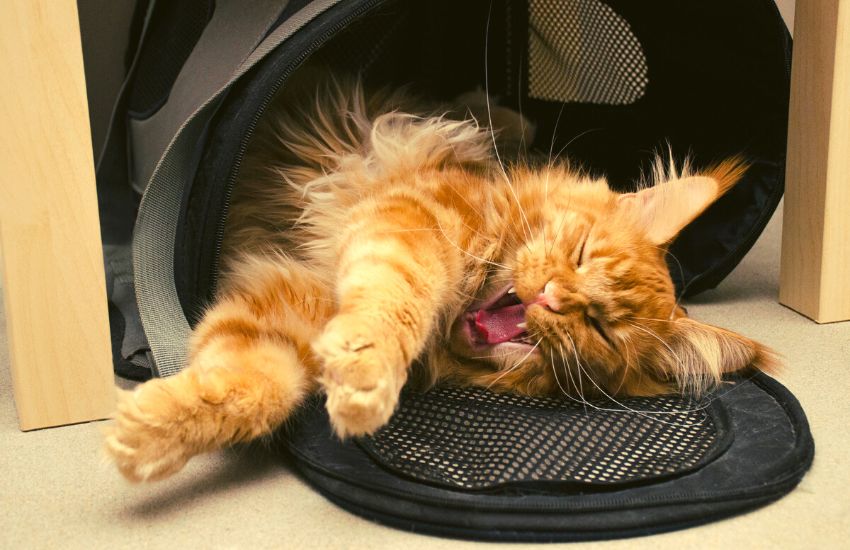
The GCCF calls the Maine Coon “generally a healthy breed” and names two hereditary health issues: hypertrophic cardiomyopathy and hip dysplasia. It gives a life expectancy between 10 and 15 years, and TICA gives 12.5 or more years.
The Cornell Feline Health Center says hypertrophic cardiomyopathy (HCM) is the most common heart disease of cats and is more prevalent in certain breeds, including the Maine Coon. HCM thickens the muscular walls of the heart. Cornell says many cats with HCM do not appear to be ill, and that others may show signs of congestive heart failure, including “labored or rapid breathing, open-mouthed breathing, and lethargy.” HCM is diagnosed by echocardiography, and Cornell says it has no known cure but that a specialized care plan can help manage the signs.
A 2022 study in Veterinary World tested 49 Maine Coon cats aged at least 10 months for two gene variants linked to hypertrophic cardiomyopathy. It found the A31P variant in 16.33 percent of the cats and the A74T variant in 24.45 percent. Cornell says genetic test results should be interpreted carefully with the guidance of a veterinary professional, since not all cats that have these mutations will develop the condition.
TICA says responsible breeders test their cats for HCM with both DNA testing and periodic echocardiograms read by a board certified veterinary cardiologist. The GCCF says a DNA test for HCM exists for Maine Coon cats and that cats used for breeding can have an ultrasound scan of the heart.
You can try contacting the breeder to know fully about your cat's genetic history. If not possible, it is wise to consider going for yearly heart ultrasounds in order to identify it as early as possible.
Cornell says feline hip dysplasia is a genetically inherited malformation of the ball-and-socket joint that connects a cat’s thigh bone to its hip, and that compared with dogs and humans it is rare in cats. Cornell says it is widely thought to have a genetic component “since it seems to be more prevalent in certain breeds, such as Maine Coons.” Its listed signs are limping or other apparent difficulties in walking, avoidance of physical activity, expression of pain if the hip is touched, and persistent licking or chewing at the hip area. An X-ray of a painful hip joint gives a definitive diagnosis.
Ursula Krotscheck, DVM, an assistant professor of small animal surgery at Cornell University’s College of Veterinary Medicine, advises: “Make sure that your cat is not overweight, and encourage exercising to keep the hip muscles strong.” The GCCF says there is no simple gene test for hip dysplasia, and that breeding cats can be X-rayed to assess the hip joints before they are used in a breeding program. TICA says many breeders X-ray their breeding cats for hip dysplasia. Read more about signs of pain in cats.
Check out some of our cat lover shirts for more kitty goodness. We ensure that 25% of the proceeds are donated to no-kill animal shelters.
Not usually. The CFA says their daily conversation may include chirps, trills, and purrs as well as an occasional meow, but they are not considered a talkative breed. TICA says most have a soft chirp or trill. The GCCF describes a quiet chirping voice, although they can also yowl when demanding food.
It depends on the cat. TICA says most are not lap cats, while the CFA says they tend to go from one lap to another.
Many do. The CFA says Maine Coons are fond of water, and that many will watch a dripping faucet in fascination, wash food or toys, or even try to join you in the shower. TICA says most Maine Coons like water.
TICA gives a life expectancy of 12.5 or more years. The GCCF gives a life expectancy between 10 and 15 years.
Comments
Leave a comment